TikTok at a Crossroads — A Creator Exodus Amid Algorithm Chaos & U.S. Ownership Shift
Published on Feb 06, 2026
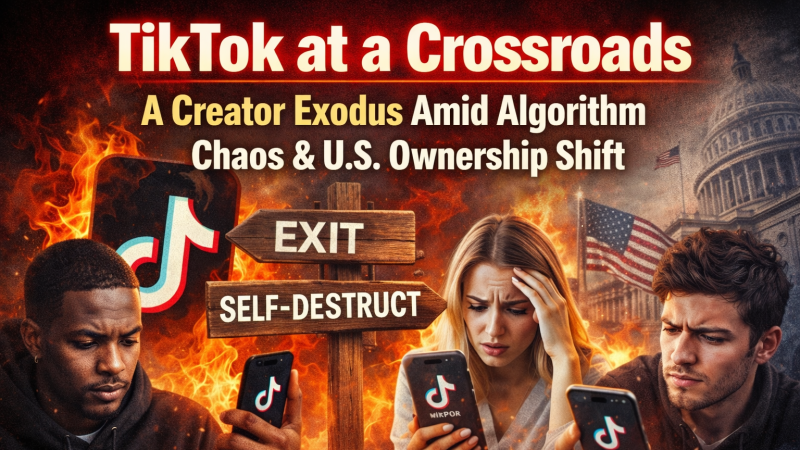
In early 2026, TikTok — once the undisputed powerhouse of short‑form video — finds itself in a period of intense uncertainty. A dramatic change in ownership structure, algorithm retraining, and widespread creator frustration have exposed deep tensions between platform governance and the realities of content creation. What was once a playground for viral creativity is now feeling like a gauntlet of opaque rules and unpredictable reach.
The U.S. Ownership Transition & What It Means
On January 22, 2026, TikTok’s U.S. operations were officially transferred to a majority‑American ownership entity — TikTok USDC Joint Venture LLC, led by investors including Oracle, Silver Lake, and others — after years of regulatory pressure. This deal was designed to comply with national security legislation concerning “foreign adversary controlled applications.”
But the rollout has been bumpy at best.
Outages and glitches plagued the platform immediately after the transition, with users unable to upload, unexpected zero‑view counts, and unusual review delays — amplifying fears of censorship and technical instability.
Government scrutiny intensified, with investigations into alleged content suppression — especially around contentious political or protest‑related posts — further eroding trust.
For creators, this has not felt like a smooth evolution — but a reset that threatens their livelihood.
Algorithm Shifts: The “Black Box” Trouble
Creators have long learned the ins and outs of TikTok’s “For You” page — what hooks audiences, what retains attention, and what sparks virality. But recent changes signal a departure from that model.
Retraining the Algorithm
TikTok’s recommendation engine is now being retrained on U.S.‑based data under the new ownership, a technical shift that appears to have real consequences for content reach and engagement.
Global Visibility Impact — aka “Soft Geofencing”
Because TikTok’s U.S. and global systems are now more separate, creators who built followings outside the U.S. report sharp declines in their international reach — a kind of unspoken geofencing that de‑prioritizes non‑domestic distribution.
This matters because global views were once a foundational growth engine for creators — powering brand deals, monetization, and broader influence.
Creators Sound the Alarm: Engagement & Monetization Cratered
Across Reddit threads, industry commentaries, and creator testimonials, the narrative has been consistent: reach is down, and payouts have plummeted.
Many creators report stalled analytics, with videos that sit at zero views despite likes — or dashboards that fail to load past data.
Payout rates (RPMs) — normally tied to creator monetization — have reportedly shrunk dramatically, sometimes yielding just pennies on videos that once earned dollars or tens of dollars per thousand views.
Smaller creators in international markets (e.g., Nigeria) said recent algorithm updates have scaled back their visibility, favoring celebrities or major accounts.
Anecdotally, some creators have seen hundreds of dollars vanish into zero‑earning posts overnight, with appeals rejected and content removed without clear explanation.
Moderation: Consistency Complaints & Censorship Fears
Separate from algorithmic reach, creators and journalists alike have described platform moderation as inconsistent or unclear:
News creators especially are reporting erratic takedowns, unexplained strikes, and opaque moderation outcomes.
Technical moderation (often AI‑driven) has replaced many human reviewers, leading to broader complaints about context being lost and creators unable to effectively appeal decisions.
These factors fuel perceptions — whether grounded or not — that the platform is becoming more stringent and less creator‑friendly.
Diversification: The New Survival Strategy
Faced with unpredictability on TikTok, creators aren’t waiting for stability — they’re diversifying.
Where They’re Going
YouTube Shorts and Instagram Reels see growing attention from creators seeking reliable reach.
Emerging platforms like UpScrolled are gaining traction as TikTok alternatives, promising less restrictive recommendation systems.
Many creators are focusing on building ownable audiences through newsletters, Discord communities, and direct platforms (Patreon, Substack) as a hedge against platform volatility.
Digital strategists now emphasize that multi‑platform presence isn’t optional — it’s risk management.
What This Means for the Broader Creator Economy
TikTok’s turbulence reflects a broader trend: platform algorithm dependency remains a major creator risk.
Social‑media analytics experts noticed that many platforms are tightening engagement thresholds and prioritizing sustained attention over random virality — complicating growth strategies.
Cross‑platform consistency and diversified revenue models are now key to sustainable creator businesses.
In short: the era of relying on a single algorithm to drive success is fading.
Conclusion: Uncertainty as Catalyst
For TikTok creators in early 2026, the environment is far from stable. Between ownership restructuring, algorithm retraining, monetization challenges, and moderation inconsistency, many creators are recalibrating their futures.
But out of this uncertainty comes a valuable lesson: resilience in the creator economy is built on diversification, adaptability, and audience ownership — not on algorithms alone.
Whether TikTok stabilizes or continues to evolve dramatically, creators are already writing the next chapter of digital content — one that is broader, more strategic, and less dependent on a single platform’s whims.