DJ Pharris: Chicago’s Maestro of the Mix
Published on Feb 19, 2026
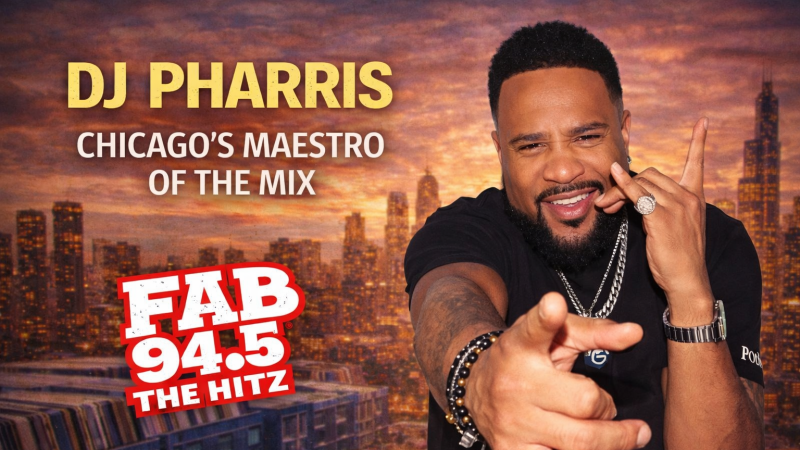
In a city defined by its contradictions — brutal winters, unshakable pride, and a music scene that refuses to be categorized — there exists a figure who has quietly, persistently shaped the soundtrack of Chicago for decades. DJ Pharris isn’t just a DJ. He’s a curator of moments, a bridge between generations of artists and audiences, and at times, the voice of a city still fighting to be heard on the global stage.
From House Heads to Hip-Hop Hearts
In 1986, Pharris Thomas walked into the studios of WBMX, a Chicago radio station already steeped in the language of house music. It was a moment few would have recognized then as historic — but in the years that followed, Pharris’s sets became touchstones for the city’s shifting musical landscape. He started with house, the danceable, soul-infused black music that pulsed from Chicago’s clubs, but it wasn’t long before he expanded his palate and influence into hip-hop, R&B, and the evolving vernacular of urban radio.
House taught him how to move feet; hip-hop taught him how to reach hearts. Few DJs in his generation have been equally fluent in both.
The Power 92 Era: Legacy on the Airwaves
For most Chicagoans, DJ Pharris is synonymous with Power 92 — the station where his voice became woven into the city’s routine: the afternoon commute, the night out, the soundtrack to late nights and early mornings. On air, his influence rippled beyond Chicago — at one point his show was syndicated to more than 48 stations, giving listeners across the Midwest access to his picks, his drops, and his take on music that mattered.
He wasn’t content just spinning records.
He partnered with brands like Pepsi, Nike, and Under Armour, and even tied into entertainment properties — including serving as the official DJ for 50 Cent’s comedy series 50 Central on BET and appearing on The Chi.
“This Chicago”: A Viral Cultural Signature
Among DJ Pharris’s most enduring — and widely repeated — contributions to Chicago culture is the phrase “This Chicago.” First emerging as a vocal ad-lib and tag in his sets and mixtapes, “This Chicago” became more than just a line — it became a declaration. From tracks to caps to streetwear collabs with classic local brands, the phrase spread as a cultural stamp of approval and identity for the city’s artists and fans alike.
It was a seemingly simple call — three words that captured pride, defiance, and unity — but in Chicago’s fractured cultural landscape, that little phrase resonated. It was shouted out in tracks, broadcast on air, printed on apparel and became a sort of unofficial anthem that Chicagoans across neighborhoods adopted as a badge of honor. Whether celebrating a homegrown artist or simply affirming where you came from, “This Chicago” became shorthand for the city’s gritty, unfiltered sense of self.
The Bears, the Chant, and the City
In the winter of 2026, that same energy leapt out of the music world and into the heart of Chicago sports fandom. As the Chicago Bears gained momentum in their season, Pharris’s rallying cry — often circulated on local airwaves and social media — began making its way into locker rooms, fan chants, and game-day hype. Bears personalities and even players were quoted repeating the phrase “It’s Chicago” to energize each other after wins and before big moments, effectively giving the city’s football moment its own musical pulse.
This crossover of musical culture into sports fandom turned “This Chicago” into something larger than a radio tag — it became a citywide battle cry, a viral slogan that encapsulated a feeling of home, heritage, and collective momentum.
Beats and Bonds: Studio Room, Street Room
If radio built DJ Pharris’s name, the studio helped cement his legend.
He moved from spinning records to making them, earning production credits on songs that blazed through popular culture. Among them: work on Kanye West’s “Fade” and appearances on other West-affiliated tracks, co-producing for Future, and collaborations with artists like Chief Keef, Lil Bibby, and Jeremih.
This wasn’t just feature-credit work — it was cultural cross-pollination. A Chicago DJ working with some of the city’s most influential producers, helping bring local flavor into the mainstream.
A Label for a City: This Chicago Music Group
By 2019, Pharris was ready for a new chapter: not just influencing music, but building infrastructure to lift up others. He launched This Chicago Music Group (TCMG) with the explicit purpose of amplifying homegrown talent and forging collaborations that challenge the status quo.
The first single, “BO$$,” paired Young Dolph and G Herbo — a signal that Pharris’s vision was about giving voice to Chicago’s artists on a national stage.
More Than a DJ
Pharris’s story isn’t simply one of records and spins; it’s of resilience and relevance. He’s been inducted into the Frankie Knuckles DJ Hall of Fame and is a three-time Global Spin Award winner, honors that speak to his peers’ esteem and his impact in a highly competitive field.
What makes him rare isn’t just his longevity — it’s his adaptability. He can own a room at a Chicago nightspot, headline a radio shift, navigate the cutthroat world of production credits, and build a label that elevates others without losing his own voice.
Chicago’s Conductor
In a city that birthed house, nurtured hip-hop stalwarts, and insists on authenticity, DJ Pharris is a connective tissue. He’s someone who learned the city’s rhythms from the inside out — from breakbeat clubs of the 1980s to the corporate partnerships and cultural slogans of today.
What’s striking about Pharris isn’t just that he survived in an industry obsessed with the new — it’s that he made space for the new while honoring where he came from. Whether he’s spinning at Power 92 or producing with some of the biggest names in music, Pharris’s pulse still feels like Chicago’s: restless, inventive, and always moving forward.