Englewood Barbie: The Flower Through Concrete
Published on Feb 16, 2026
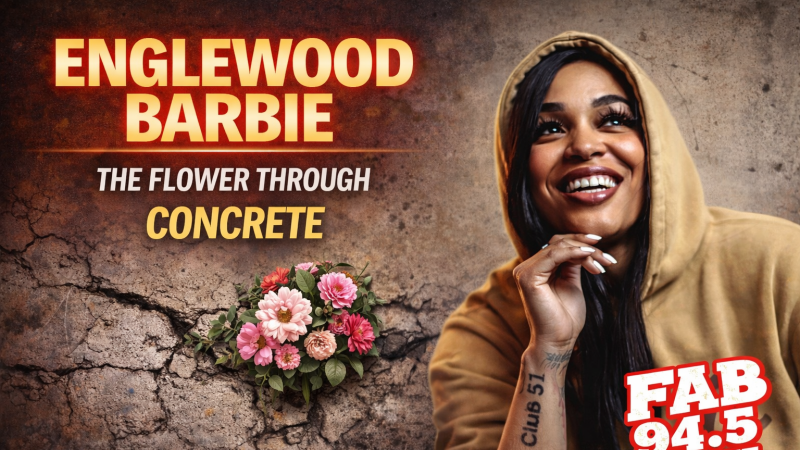
How Dr. Aleta Clark Turned a Nickname Into a Movement for Dignity, Community, and Unconditional Love
For most people, Englewood evokes headlines about violence, economic hardship, and the struggle of survival on Chicago’s South Side. But for the thousands who know Englewood Barbie, it represents resilience, hope, and radical love — personified in a woman whose impact far exceeds any online moniker.
Dr. Aleta Clark didn’t choose her nickname — it chose her. What began as a casual joke among neighbors grew into a banner under which community members rallied. “You’re from Englewood, you’re cute!” they told her. The name — Englewood Barbie — stuck, and Clark embraced it with an unexpected seriousness, transforming a seemingly playful identity into a mission rooted in dignity and service.
Roots: From Pain to Purpose
Clark’s journey is deeply personal. As chronicled in Chicago Magazine, she endured trauma early in life, navigating foster care and adversity on the South Side. Later heartbreak — most notably the 2015 gang execution of 9‑year‑old Tyshawn Lee — and the loss of her own mother to addiction became catalysts for Clark’s work. “It just messed me up,” she has said of Lee’s death, not as an abstract statistic but as a call to action.
Out of that pain came Hugs No Slugs, a nonprofit Clark founded in 2015 with grassroots energy and a simple philosophy: replace violence with love, connection, and sustained service. Through Hugs No Slugs, she sought not just to respond to crises but to reshape the narrative around respect, community, and empowerment.
Club 51: A New Kind of Community
Much of Clark’s work centers around Club 51, named for the under‑viaduct community along 51st Street and Wentworth. Unlike traditional shelters and outreach programs, Club 51 rejects labels like homeless or disadvantaged — Clark insists on calling those she serves her friends. This lexical choice isn’t semantic; it’s philosophical. By humanizing those who are often overlooked, she creates connection rather than charity.
Night after night — sometimes through bone‑chilling Chicago winters — Clark showed up to serve meals, offer haircuts and showers, hand out clothing, and simply sit with her friends as equals. She funded these efforts with her own money and through community donations, later attracting the support of figures like the late fashion visionary Virgil Abloh and NBA greats who helped sponsor safe houses and resources.
One Thanksgiving event embodied Clark’s ethos: she hosted a feast complete with fresh clothes, a shower station, and new shoes — not just so her friends would eat, but so they would feel special. The menu was curated, the experience respectful, and the message clear: “You matter.”
A Mission Beyond Meal Service
Clark’s vision extends beyond feeding and sheltering. Her events — from back‑to‑school drives giving students self‑care and supplies to Black History Month talent shows — are designed to rewrite how communities see themselves. She fights stereotypes not through rhetoric but through action and presence.
Her mission has also included ambitious advocacy: at times sleeping outside with her friends to raise funds for a new shelter, and aiming to raise $1 million to build a permanent space of safety and dignity. Even when met with resistance — such as canceled hotel bookings — Clark remained undeterred, turning setbacks into sources of momentum.
Beyond the Streets: Her Health Fight
What makes Clark’s commitment even more remarkable is that she’s been doing this work while battling her own serious health challenges. In 2025, Clark publicly shared her struggle with supraventricular tachycardia (SVT), a condition that causes sudden, dangerously fast heart rhythms.
In a heartfelt appeal to her community, she described frightening episodes where her heart rate spiked above 250 beats per minute, leaving her temporarily immobilized and unable to speak — experiences that required doctors to restart her heart multiple times.
Clark announced that she would undergo a second heart surgery and emphasized the need to build a long‑term plan for her health — including nutrition, therapy, fitness, and a period of rest. Her message to supporters was clear: “I’ve poured into so many others; now I have to pour into myself.”
Despite these challenges, Clark’s presence in the community and her drive to serve have not diminished. If anything, her health struggles have deepened her empathy for the vulnerabilities of others — reminding even her critics that advocates are human beings whose health and well‑being matter just as much as the causes they champion.
Recognition and Impact
After nearly a decade of relentless, nonjudgmental service, Clark’s work has begun to garner institutional recognition. In early 2026, the city of Chicago designated Feb. 1 as “Englewood Barbie Day,” a formal acknowledgment of her decade‑long dedication to feeding, sheltering, and standing with those often forgotten.
Through every plate of food served, every bag of groceries handed out, and each night spent beside her friends under the viaduct, Clark has rejected the idea that service must be sanitized or confined to traditional “help.” Her message is far simpler — and harder: show up, see people, love them fiercely and without judgment.
The Name That Changed a City
To outsiders, Englewood Barbie might sound like a contradiction in terms — an unlikely title for a serious activist. But for those whose lives she has touched, the name reflects transformation: beauty that grows not in spite of adversity, but because of it.
Clark has become a flower through concrete — rooted not in privilege but in purpose. And that may be her greatest legacy: not the meals served, not the safe houses opened, not even the official proclamations — but the lives that have been seen, named, and loved because she showed up.