Willie Wilson: The Relentless Architect of His Own American Dream
Published on Feb 16, 2026
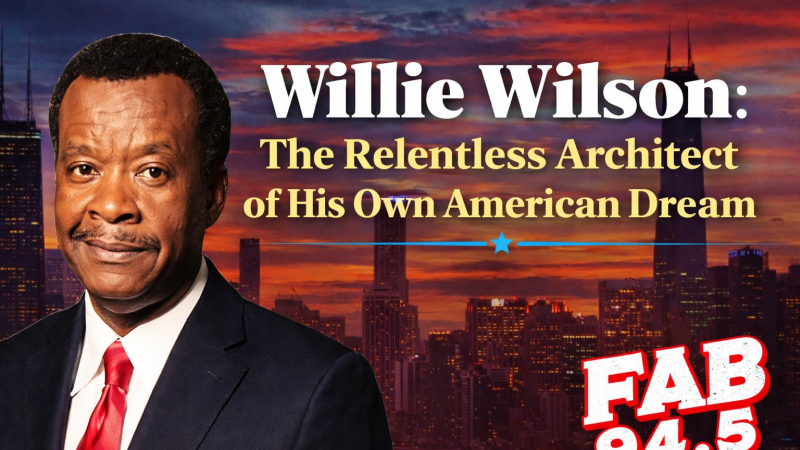
In a quiet office high above Chicago’s bustling streets sits a man who has woven into his life story all the contradictions and possibilities of the American Dream. Willie Wilson, at 77, remains one of Illinois’s most compelling — and controversial — figures: a self‑made businessman, gospel media pioneer, generous philanthropist, and perennial political candidate whose life reads like a modern folk tale of grit, faith, reinvention, and unshakeable ambition.
Humble Roots, Unbreakable Spirit
Born on June 16, 1948, in the tiny farming community of Gilbert, Louisiana, Wilson’s beginnings could not have been more modest. He was the son of a sharecropper, picking cotton and cutting sugar cane for as little as twenty cents an hour, a rhythm of labor that taught him early what hard work truly meant. He left home at thirteen — not in rebellion, but in survival — moving to Miami and later New York City before finally planting roots in Chicago in 1965.
Chicago would become the crucible of Wilson’s reinvention. Like many who arrive with little but hope, he started at the bottom: mopping floors and flipping burgers at a McDonald’s. But within a few short years, he climbed through the ranks to management, then secured a loan to purchase his first franchise. That move marked the opening chapter of a business career built not on pedigree, but persistence and hustle.
The Businessman Who Expanded His World
Wilson’s entrepreneurial instinct soon led him to sell his McDonald’s holdings — five franchises in total — and to diversify into new ventures. In 1987 he founded Willie Wilson Productions, Inc. and launched Singsation, a gospel music television show that became a national staple. The program aired in millions of homes and eventually earned a Chicago/Midwest Emmy Award in 2012, making Wilson one of the first African‑American owners of a nationally syndicated television series.
But Wilson didn’t stop at media.
In 1997 he launched Omar Medical Supplies, Inc., a company that would grow into one of the fastest‑growing medical supply distributors in the United States. With sourcing operations extending to global markets such as China, Omar supplies products across medical, industrial, and foodservice sectors — a testament to Wilson’s ability to shape opportunity from experience.
Through these endeavors, Wilson amassed a substantial fortune and earned multiple honorary doctorates, including a Doctor of Divinity and a Doctor of Humane Letters — distinctions that have fueled both admiration and critique in public life.
Voice of Faith and Community
For Wilson, success was inseparable from service. His gospel roots weren’t mere aesthetics — they were identity. He recorded multiple albums, hosted Singsation with heartfelt sincerity, and often spoke of his journey as one shaped by faith in Jesus Christ — a theme he explored in his 2008 autobiography What Shall I Do Next When I Don’t Know Next What to Do? The book is both personal and philosophical, recounting his trials, triumphs, and the spiritual framework that guided him from Louisiana’s cotton fields to Chicago boardrooms.
His philanthropic footprint has been tangible in a city long craving equitable opportunity. In recent years, Wilson has hosted large‑scale community giveaways — providing gas, groceries, and support to thousands of residents — demonstrating a blend of personal largesse and political messaging that critics sometimes debate but neighbors directly feel.
Politics, Persistence, and Contention
Wilson’s entry into electoral politics feels almost inevitable given his civic aspirations. Beginning with a bid for Mayor of Chicago in 2015, he has since mounted campaigns for the mayoralty again in 2019 and 2023, and even sought the Democratic presidential nomination in 2016, appearing on ballots in multiple states before eventually withdrawing. More recently he challenged incumbent Senator Dick Durbin under his own “Willie Wilson Party” banner.
But his political journey has been uneven. Wilson’s unconventional campaign style — from handing out cash at church events to staging eye‑catching community giveaways — has drawn equal parts admiration and criticism. Supporters see a man who puts his resources where his convictions lie, elevating issues often ignored; detractors decry what they view as spectacle over substance and question his grasp of complex civic challenges.
The Man in the Mirror
What makes Willie Wilson such a compelling subject is precisely the contradictions in his public life. A man driven by deep personal faith, even when faith has been tested. A business leader whose wealth is matched by an ethos of giving. A political outsider who refuses to relinquish the pursuit of public office. In Wilson’s own words, to remain static is to surrender — and if his career is any measure, surrender is not something he knows how to do.
As he continues to shape his legacy in Chicago and beyond, Wilson stands as a figure that defies easy categorization: neither hero nor villain, but a complex architect of his own destiny — and a living testament to the messy, multifaceted promise of the American Dream.