Herbie Hancock: The Eternal Innovator
Published on Feb 17, 2026
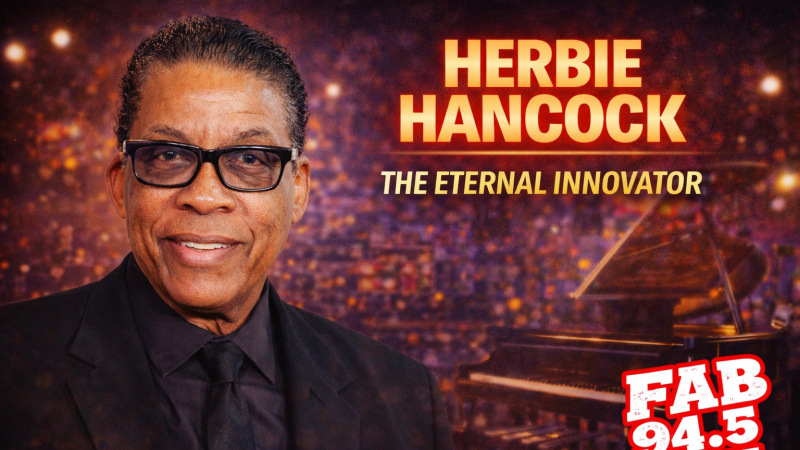
At 85, even Herbie Hancock’s presence onstage feels like a gentle rebuke to the music world’s obsession with youth. There he is — lean, poised, keys under his fingers, a figure shaped by more than six decades at the center of modern sound. To watch him play is to see a lifetime of musical evolution unfold in real time: from the acoustic jazz of the 1960s to the funk‑fueled lines of the 1970s, from electro experiments that transformed MTV in the ’80s to contemporary conversations about technology and human creativity.
Prodigy in the Windy City
Born in Chicago in 1940, Hancock’s musical arc began earlier than most. By age seven he was immersed in piano; by eleven, he’d performed the first movement of a Mozart concerto with the Chicago Symphony Orchestra, a feat that marked him as more than a promising student — a prodigy.
Music wasn’t Hancock’s only intellectual pursuit. At Grinnell College he double‑majored in electrical engineering and music composition, laying the foundation for a career that would never settle into one genre. In the early 1960s, trumpeter Donald Byrd brought him to New York, a city then alight with jazz revolution.
Miles Davis and the Second Great Quintet
In 1963, Hancock joined Miles Davis’s Second Great Quintet, a group that, in the hands of Davis, Tony Williams, Ron Carter, Wayne Shorter, and Hancock himself, reshaped the jazz language. Here, Hancock wasn’t just a pianist; he was an architect of sound, expanding the role of harmony and rhythm in spontaneous performance. The interplay was conversational — sometimes abstract, often daring — and Hancock’s touch became a defining force in post‑bop.
During this era, Hancock also built his own solo catalogue — Empyrean Isles and Maiden Voyage among them — grappling with tension, space, and harmonic color in ways that feel as fresh today as they did at their release. These recordings remain staples in jazz canon.
Fusion, Funk, and the Electric Frontier
By the late 1960s, Hancock’s curiosity pulled him toward electricity. He began experimenting with electric piano, synthesizers, and sound textures. After leaving Davis’s band, he formed Mwandishi, a group that embraced avant‑garde electronics and complex rhythms. While that band eventually dissolved under financial strain, Hancock had already begun setting the stage for something much larger.
In 1973 came Head Hunters, an album that transformed jazz. Deeply rooted in funk, rhythm, and groove, Head Hunters — with tracks like the expansive “Chameleon” — became one of the best‑selling jazz albums of its era, introducing Hancock’s sound to audiences far beyond jazz purists.
Crossing Over: “Rockit” and the MTV Age
Always restless, Hancock embraced the pop and electronic zeitgeist of the 1980s. His 1983 single “Rockit” became a cultural moment — a funk‑infused, electronic instrumental that lit up MTV with its surreal music video. For many, it was an entry point to Hancock’s universe: rhythmic, experimental, and endlessly inventive.
The Grammys, Film, and Collaboration
Hancock’s career has never slowed. He composed film scores, including the soundtrack for Round Midnight, for which he won an Academy Award. With 14 Grammy Awards — including Album of the Year for River: The Joni Letters in 2007 — his versatility spans from jazz to world music to mainstream pop collaborations.
Collaborators run the gamut from Wayne Shorter to Stevie Wonder, from Joni Mitchell to contemporary artists bridging genres. This willingness to share the stage — and the studio — underscores Hancock’s artistic ethos: music as an evolving dialogue.
Cultural Ambassador and Educator
Beyond performance, Hancock has shaped culture institutionally. He’s chaired the Herbie Hancock Institute of Jazz, nurturing future generations of musicians, and served as a UNESCO Goodwill Ambassador for intercultural dialogue, promoting art as a pathway to peace. In 2013 he received the Kennedy Center Honors. Most recently, in 2025, he was awarded the Polar Music Prize, joining an elite lineage of global music innovators.
Legacy: The Sound of Possibility
What defines Hancock isn’t a single genre or era but his unquenchable curiosity. Whether redefining jazz’s rhythmic core with Davis, pioneering jazz‑funk fusion, embracing electronic textures long before digital music’s mainstream ascent, or mentoring young artists today, his fingerprints are on the soundtracks of several generations.
At the Barbican in 2025, critics noted that Hancock’s performance — spanning acoustic jazz to funk to hip‑hop rhythms — wasn’t a retrospective so much as proof of an artist still actively shaping sound. His humility — deflecting praise to his bandmates — belies the truth: few musicians have charted as daring, unpredictable, and impactful a course.
If Herbie Hancock’s career teaches anything, it’s that boundaries are not endpoints but invitations — to question, to explore, to reimagine. In Hancock’s world, the next horizon is always just one chord change away.