Da Brat: From Chicago Breakout to Cultural Matriarch
Published on Feb 13, 2026
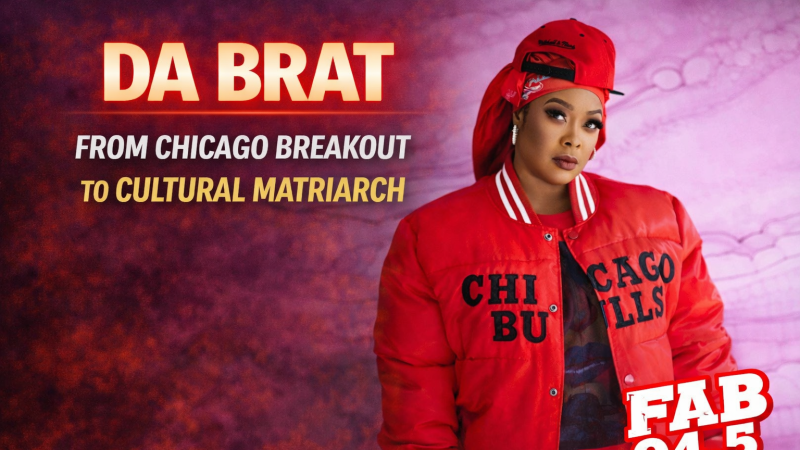
In the annals of hip-hop history, there are artists whose stories are defined not just by their hits, but by the seismic shifts they helped create. Shawntae Harris—better known to the world as Da Brat—is one such figure. From the gritty streets of Chicago to platinum plaques and primetime television screens, her journey is as bold and uncompromising as her lyrics.
The Chicago Prodigy Who Couldn’t Be Ignored
Born on April 14, 1974, on Chicago’s West Side, Shawntae Harris grew up splitting time between two households. At her mother’s, she was disciplined, playing drums and singing in gospel choirs; at her father’s, she embraced the freedom of rap, slang, and swagger that would later define her style.
Her stage name—which references a mischievous, spoiled personality—came from being the lone child in a household that both indulged and disciplined her. It was a persona she would carry into her music: tough, quick-tongued, and fiercely unfiltered.
At 18, Da Brat’s life changed when she won a Yo! MTV Raps contest in 1992. That victory led to a meeting with Southern producer Jermaine Dupri and a contract with his So So Def Recordings label.
Funkdafied: Hip-Hop’s First Platinum Female Solo Album
In 1994, Da Brat released Funkdafied, a record that would simultaneously shatter ceilings and redefine perceptions of female MCs. With its stripped-down funky beats and brash delivery, the title track became a hip-hop staple. It peaked at No. 6 on the Billboard Hot 100 and dominated rap charts, while the album went platinum—making Da Brat the first female solo rapper to sell over one million records.
At a time when hip-hop was still male-dominated, her success was seismic. Critics praised her flow and swagger, and even detractors acknowledged her place in the culture. Her music—rooted in street authenticity but polished enough for crossover appeal—made her a forced presence on both rap and pop stages.
Collaborations, Screens, and Sustained Presence
Da Brat didn’t stay confined to her own albums. Throughout the 1990s she became a sought-after collaborator—turning up on remixes with Mariah Carey, TOTAL, and other R&B stalwarts, bringing her sharp tongue to broader audiences.
Beyond music, Brat embraced acting, appearing in films like Kazaam (1996) and guest spots on television shows, proving her versatility extended far beyond the booth.
In the 2000s and 2010s, she continued to reinvent herself—reentering the charts with features, appearing on reality television, and forging a successful second act as a radio and TV personality, including co-hosting the nationally syndicated Rickey Smiley Morning Show and appearing on Dish Nation.
Since 2016 she’s been a fixture on shows like The Rap Game and Growing Up Hip Hop: Atlanta, mentoring young talent and chronicling her own evolution on screen.
Coming Out, Family, and a New Legacy
For much of her early career, Brat kept her personal life private—a choice that mirrored how hip-hop itself operated in the 1990s, where queerness was often stigmatized or outright rejected. In 2020, she publicly came out as bisexual and shared her relationship with entrepreneur Jesseca Dupart—a revelation that resonated with fans and fellow artists alike.
Their partnership quickly became one of hip-hop’s most visible LGBTQ+ power couples. In 2022, they married, and in 2023 welcomed their son, True Legend, at age 49—a journey they candidly shared through IVF and the challenges that came with it.
Their story is now at the heart of The Way Love Goes, a memoir and relationship guide slated for publication in 2026, weaving love, commitment, and real-world challenges into a narrative both intimate and universal.
Legacy Beyond the Mic
Three decades after Funkdafied, Da Brat’s influence echoes in conversations about hip-hop’s evolution. Her success helped widen what was possible for women in rap—paving the way for diverse voices to hold space, challenge norms, and thrive creatively.
Critics sometimes debate her stylistic originality, but her accomplishments are indisputable: from chart-topping platinum records to mentoring the next generation, to living openly and boldly in an industry notorious for barriers.
In Da Brat’s own telling, her story isn’t just about being the first—it’s about being true: to her craft, to her resilience, and increasingly, to her truth. As hip-hop continues its relentless evolution, her voice remains an indelible part of its history.