Shawnna: Chicago’s Unapologetic Emcee and Hip-Hop Trailblazer
Published on Feb 12, 2026
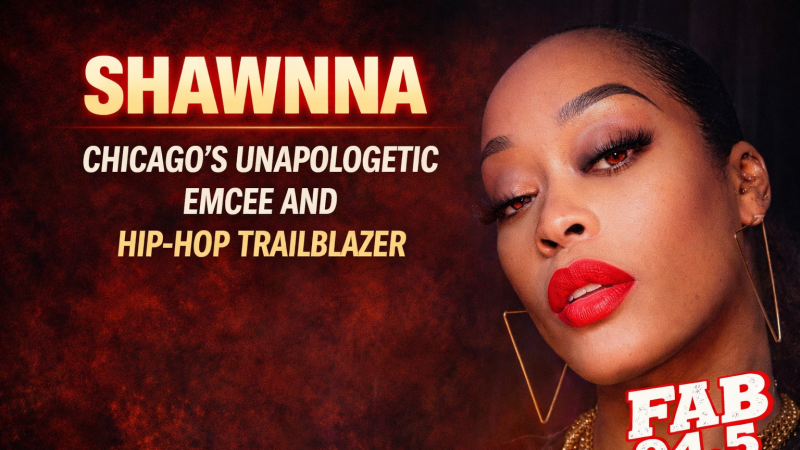
Chicago — On a brisk January morning on the South Side of Chicago, a young Rashawnna Guy began constructing rhymes the way her father constructed blues licks — with fire, instinct, and a refusal to be anything but authentic. Born on January 3, 1978, into a city of music and grit, Guy would grow up to become Shawnna — a name synonymous with fearless lyricism, Chicago swagger, and hip-hop ascendance at the turn of the millennium.
Roots: From Blues Royalty to Rap Royalty
Shawnna’s pedigree is as rich as Chicago’s musical history. She’s the daughter of legendary blues guitarist Buddy Guy, a towering figure in American music whose six-string mastery influenced generations. Yet, while blues flowed through her blood, Shawnna charted her own course. The streets around her — a mosaic of urban verse, rhythm, and struggle — became the backdrop for her entry into hip-hop.
In high school, she began writing rhymes — not as a hobby, but as a calling. Her cadence reflected the sound of the city: rapid, raw, and unflinching. It wasn’t long before she stepped out from the shadows of her lineage and into her own spotlight.
Infamous Syndicate: Breaking In and Shaking Up
In 1997, Shawnna teamed with rapper Lateefa “Teefa” Harland to form Infamous Syndicate, one of the pioneering female rap duos emerging from Chicago’s vibrant scene. Their journey began the old-fashioned way — hustling demos, building local buzz, and opening for touring artists like Junior M.A.F.I.A. — until Relativity Records offered them a deal. Their lone album, Changing the Game (1999), showcased gritty production and fierce performances grounded in Chicago’s hip-hop vernacular, with early contributions from producers like No I.D. and Kanye West.
Though the album didn’t soar commercially, it marked a crucial first chapter: Shawnna had arrived. And when Infamous Syndicate disbanded, a larger stage awaited.
Solo Breakthrough: From Fantasy to ‘Stand Up’
The early 2000s were a transformative period in hip-hop, and Shawnna surfed that wave with unforgettable momentum. Her connection with Atlanta’s Ludacris and his Disturbing tha Peace imprint opened doors that once seemed shut. In 2000, Shawnna appeared on Ludacris’ breakout single “What’s Your Fantasy”, injecting the track with her unique energy and laying the foundation for her rise to national prominence.
But it was her return alongside Ludacris on “Stand Up” in 2003 that etched her name into hip-hop history. The track soared to No. 1 on the Billboard Hot 100 — a rare feat for any artist, and especially remarkable for a female rapper in a male-dominated field. With this achievement, Shawnna joined an exclusive lineage of women whose voices dominated mainstream hip-hop charts.
Albums and Artistic Identity
Shawnna’s debut solo album, Worth tha Weight (2004), distilled her signature style: razor-sharp delivery, candid themes, and an unfiltered voice that evoked both swagger and vulnerability. The single “Shake Dat Shit” featuring Ludacris captured her dynamic on the mic, announcing her arrival as a solo force.
Two years later, Block Music (2006) expanded her repertoire, producing the Top 40 single “Gettin’ Some” — a track that became a club anthem and solidified her relevance amid an evolving hip-hop landscape.
Her sonic footprint wasn’t limited to her records. Shawnna also appeared on the remix to Mariah Carey’s “Loverboy” and was even a playable character in the 2004 video game Def Jam: Fight for NY, a testament to her cultural reach beyond music alone.
Legacy and Influence
Two decades after her industry debut, Shawnna remains a vivid presence in hip-hop — not just as a veteran emcee, but as a blueprint for future Chicago artists. Her rapid-fire flow, distinct personality, and authenticity helped pave the way for a generation of women rappers who refuse to be quiet, sidelined, or overlooked.
In 2025, she stood on the pitcher’s mound at Guaranteed Rate Field, throwing the ceremonial first pitch for a Chicago White Sox game — a symbolic moment that tied together her musical legacy with the city’s cultural heart. It was a gesture that recognized Shawnna not only as a musician but as a fixture of Chicago pride and influence.
The Chicago Blueprint
Shawnna’s story is a narrative of evolution — from a young rapper shaped by the South Side’s gritty reality to an artist who took up space in mainstream hip-hop with grit and grace. She has navigated industry shifts, personal expectations, and cultural stereotypes with a voice that remains unapologetically hers.
Her roots in Chicago — in the blues legacy of her family and the hip-hop hustle of the streets — continue to inform her artistry. And as hip-hop expands on national and global stages, Shawnna’s career stands as a reminder: influence isn’t just measured in chart numbers or accolades, but in the doors opened, the voices amplified, and the cultural ground broken.
In an era that often overlooks female pioneers, Shawnna’s enduring presence insists we remember her place in hip-hop’s evolving story — the Chicago native who turned her rhythm into legacy.