DJ Slugo — Chicago’s Ghetto-House Alchemist Who Rewrote the Dance-Floor Rulebook
Published on Feb 23, 2026
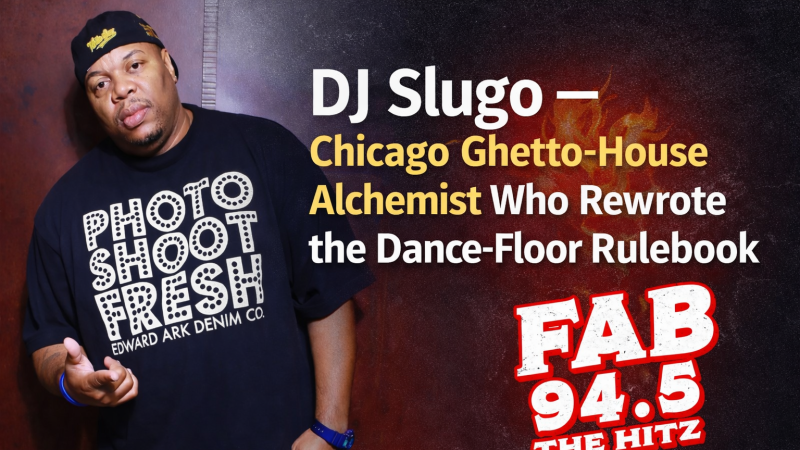
In the late 1980s, in the smoke-streaked halls of South Side high school gyms and jam-packed basement parties, a skinny kid with an insatiable hunger for rhythm stepped behind a set of turntables and changed the course of underground dance music. Thomas Kendricks — better known to the world simply as DJ Slugo (@djslugomusic) — is one of the architects of ghetto house and juke, sonic dialects that emerged from Chicago’s streets and reshaped global dance floors. Three decades on, he remains not just a pioneer but a living thread connecting the city’s raw origins to the pulsing heart of contemporary electronic music.
The South Side Kid Who Built a Sound
Slugo’s story begins far from the stadium lights and festival stages. Growing up in Chicago’s South Side, he was surrounded by the rhythms of life — the clattering beat of daily struggle, the contagious energy of neighborhood parties, and the music his cousin, DJ Geno, spun on old decks. “If you can get that popular from spinning records, then I want a piece of that,” he once said about his early inspiration. By age 15 he had his first taste of DJing at a school dance, a moment he later called life-changing.
His first professional mixtape, Ghetto Mix Part III, dropped in 1992 and caught the attention of Dance Mania Records, securing his place on one of Chicago’s seminal dance music imprints. Alongside co-conspirators like Paul Johnson and DJ Deeon, he helped distill the raw energy of classic house into something more urgent, visceral, and street-level — what became known as ghetto house.
The Ghetto-House Blueprint
Throughout the ’90s, Slugo’s tracks became underground anthems. Songs like Wouldn’t You Like to Be a Hoe Too, A Blunt, Godzilla Track, and Where the Rats? didn’t just fill dance floors — they defined a cultural moment. London’s Underbeat Magazine later called his mix album Cardboard Booty “the most influential ghetto house CD ever made” and dubbed Slugo “the ghetto-father of the American dance floor.”
The aesthetic was brash and unfiltered: 808s driven like piston engines, vocals that felt like neighborhood exclamations, and a relentless dance-floor focus. Unlike the slick grooves of mainstream house, Slugo’s music was rooted in the grit and cadence of the streets — an embodiment of its environment.
Blok Club DJs — A Collective for the Culture
As Slugo’s influence spread, he envisioned something broader than solo success — a coalition that could uplift DJs collectively rather than independently. That vision became Blok Club DJs, a Midwest-based DJ crew he co-founded with his cousin Byron and other like-minded artists in the late 2000s. The goal was simple but ambitious: create a powerful promotional and support network for DJs and producers working outside the mainstream.
For nearly a decade, Blok Club DJs hosted annual meet-and-greets, developed professional development opportunities, and helped members hone their craft while building industry connections. It wasn’t just about spinning records — it was about creating a unified platform for underground talent to thrive.
By the 2010s, Blok Club had become one of the largest DJ crews in the Midwest, spawning Blok Club TV and expanding its reach far beyond Chicago. The collective’s mission included breaking new artists’ records, educating members on the music business, networking, and giving aspiring DJs a stage to promote their music, embodying Slugo’s long-standing ethos of community-built success.
Beyond the Underground
For many artists, success means leaving the roots behind. Slugo did not. He continued releasing music on his own imprint, Subterranean Playhouse, and with Blok Club’s support, expanded into remixes and collaborations that brought him into broader musical conversations — from remixes for Missy Elliott (Work It) to championed support from techno luminaries like Nina Kraviz.
His catalog — reportedly more than 600 songs across 50 CDs and 15 albums — defies easy categorization. Underneath the raw energy is a curator’s understanding of how rhythm shapes experience. He’s also credited as a key influence on electronic luminaries like Daft Punk, name-checked on their track “Teachers,” a nod few artists in his subgenre can claim.
Cultural Resonance and Personal Battles
Slugo’s path has not been without turbulence. His life has intersected with broader social currents in America — from encounters with police brutality to the realities of systemic inequality. These experiences infuse his music with a visceral honesty, a truth that resonates far beyond Chicago. Though he’s sometimes critiqued for controversial lyrical content, the deeper narrative in his work speaks to resilience, community, and survival.
Legacy in Motion
In recent years, Slugo’s work has appeared on mainstream platforms including HBO and international festival stages. Vinyl series like Dance Mania Legends reaffirm his commitment to the sound he helped originate, even as the global EDM landscape evolves around him.
Tonight, somewhere between Chicago’s South Side clubs and a warehouse in Berlin or Tokyo, Blok Club DJs sets will drop — the beat will thump, the crowd will answer, and a legacy will continue its rhythm into the future. As with all enduring pioneers, the sound Slugo helped forge lives on — unpredictable, unstoppable, and grounded in community.