John Monopoly: The Man Who Quietly Shaped the Culture
Published on Feb 25, 2026
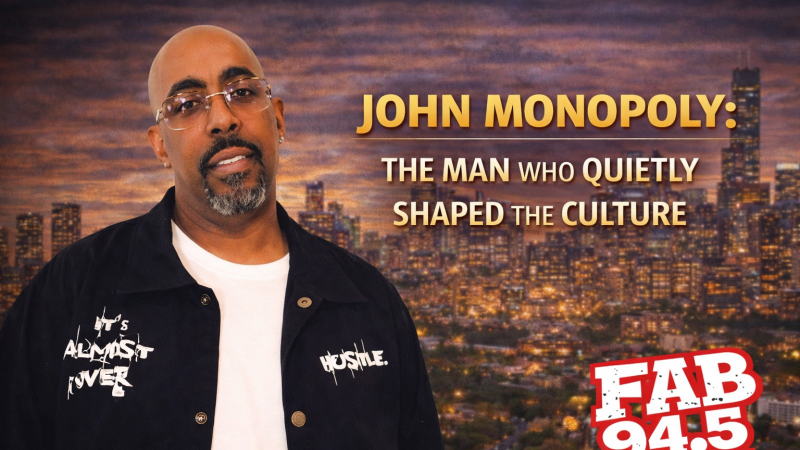
In the world of hip-hop and fashion, legends are born on stage, in studios, or in headlines. Then there are figures like John Monopoly — the architect behind the architects, the connector of creative minds, and the silent force whose fingerprints are everywhere you look but seldom directly acknowledged. From Chicago’s club scene to the highest levels of music and fashion, Monopoly has spent more than three decades influencing how culture is imagined, circulated, and owned.
Chicago’s Own: The Early Hustle
Born John Johnson on August 7, 1976, in Chicago, Illinois, Monopoly’s story starts long before record deals and fashion weeks — in the city’s underground nightlife and hip-hop gatherings where raw talent collided with street energy. Growing up, Monopoly was immersed in Chicago’s rich music and cultural ecosystem, a foundation that would define his instincts as a talent scout, promoter, and visionary.
He cut his teeth promoting underground hip-hop events in the mid-90s, co-promoting showcases that blended music, art, and community in a city historically dominated by house music. His early initiatives — from underground parties to management roles — were seeds planted in fertile ground.
Hustle in Three Dimensions: Nightlife, Music, and Branding
In 1998, Monopoly co-founded Hustle with his cousin and close collaborators, including fashion visionary Don C. What began as a nightlife brand and management outfit would evolve into something far greater. Hustle wasn’t just about parties — it was about culture transmission. It was clothing, music, movement, identity. It was the Chicago energy distilled.
Under that umbrella, Monopoly helped manage acts like Kanye West during his early career, as well as artists such as Shawnna, GLC, Naledge, and Carl Thomas. Through Hustle and his management firm Hustle Period, he became known as a man with an ear for greatness before greatness became a headline.
But even more remarkable than identifying talent was his ability to connect it — socially, creatively, and strategically.
The Connector: Ye, Virgil, and the Making of a New Vanguard
In hindsight, some of the most seismic cultural shifts of the last 20 years trace back to a handful of introductions orchestrated by Monopoly in the late 90s and early 2000s.
Fashion designer Virgil Abloh and streetwear pioneer Don C both credit Monopoly as a pivotal link in their early careers. It was Monopoly who consciously introduced the two to a young Kanye West — a trio that would eventually redefine the boundaries of fashion and music.
These connections weren’t happenstance, they were strategic: Monopoly saw not just talent, but potential ecosystems of influence long before anyone coined the term. That instinct — to link creatives so their combined force eclipsed their individual contributions — would become his signature.
Within the Industry Machine
As his reputation grew, so did his role within the institutional music business. Monopoly served in senior executive positions at Violator Management, Jive Records, and on the management teams for heavyweight artists like Busta Rhymes, Missy Elliott, and Mobb Deep. He also took on roles like Urban Marketing Director for platforms like Pheed, where he worked to bridge social technology with urban culture.
Through each chapter, his guiding philosophy remained centered on building infrastructure around creatives — whether that meant securing tours, helping artist branding, or shaping audience perception.
Hustle Reborn: Independent Power in a New Era
In 2025, Monopoly announced the launch of Hustle. Distribution with entrepreneur Paul “St. Paul” Holyfield — a Chicago-based platform designed to empower independent artists and labels with tools for global reach without sacrificing ownership.
If traditional labels represent centralized power, Hustle. Distribution embodies decentralization — a democratized pipeline for music, visuals, branding, and audience engagement. This move marks a natural evolution for Monopoly, one that places agency back into the hands of creators who once had to navigate corporate gatekeepers.
Beyond Music: Tech, Cannabis, Culture
Monopoly’s influence isn’t confined to record labels and artist rosters. He’s held leadership roles in emerging industries, including cannabis tech and social platforms, such as serving as CEO of Urban Aroma, a social equity–driven cannabis marketplace.
The breadth of his career reveals a man who hasn’t just watched culture shift — he’s preempted it.
The Legacy: A Quiet Architect of Modern Culture
Today, John Monopoly stands at the intersection of past accomplishments and future possibilities. He’s not a household name in the way artists he’s helped elevate are, but his influence — on careers, creative connective tissue, and cultural infrastructure — is unmistakable.
In a landscape where visibility often eclipses impact, Monopoly’s story is a reminder: true cultural architects don’t always stand under the spotlight — sometimes they build the stage.